Summarise this article with:
 ChatGPT
 Mistral
 Claude
 Perplexity
 Grok
Grok
Floors take the brunt of daily life. Shoes, pet paws, kitchen splashes, everyday dust, crumbs, and sticky spills all settle on your hard floor. Over time, poor cleaning habits or the wrong product can leave laminate flooring dull, wood floors streaky, and tiles coated with residue.
A well-formulated floor cleaner solution homemade can deliver excellent results — provided you respect the correct measurements, understand your surface, and avoid common mistakes. The goal is simple: remove dirt, prevent stains, protect the finish, and keep floors spotless without relying on unnecessary harsh chemicals.
Let us walk through the correct steps, from choosing the right ingredients to applying the simple mixture safely on laminate flooring, hardwood floors, and other wooden floors.
Best Cleaner for Laminate Floors
When looking for the best cleaner for laminate floors, remember one rule: moisture control is everything.
Laminate flooring does not tolerate excess water. If liquid seeps into the joints, it can cause swelling and permanently dull the finish.
A safe homemade floor cleaner for laminate floors is:
- 2 litres warm water
- 1 tablespoon mild dish soap
- Optional: a few drops tea tree or other essential oils for a fresh scent
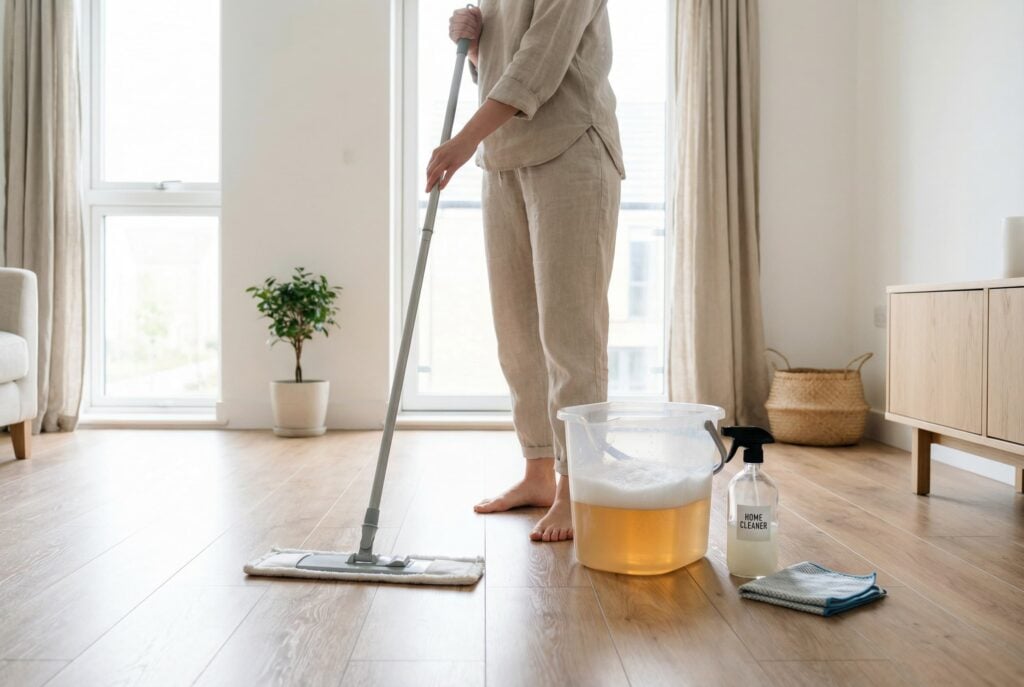
Use a lightly damp microfiber cloth or flat mop — never soaking wet. Work in small sections and dry immediately.
Avoid excessive white vinegar on laminate flooring. While it has cleaning power, repeated acidic exposure can gradually affect the protective layer.
If your goal is a gentler alternative to commercial natural cleaning products , this balanced soap solution provides the best results without risking damage.
A proper laminate flooring cleaner must remove sticky residue, lift dirt, and evaporate quickly.
Alcohol-free spray method
For light maintenance between mopping sessions, prepare a homemade cleaning spray :
- 1 litre warm water
- 1 teaspoon mild dish soap
- 5–6 drops essential oils
Pour into a spray bottle. Lightly mist the floor and wipe with a dry microfiber cloth.
This method avoids excess moisture and reduces the risk of water seeping into the joints of your laminate flooring.
Some people use alcohol for faster evaporation. However, if you are specifically looking for a homemade floor cleaner without alcohol, this soap-based formula is safer for regular use and offers sufficient cleaning power.
How to Clean Laminate Floors
The easiest ways to maintain laminate floors are preventative.
Follow these correct steps:
- Vacuum or sweep daily to remove everyday dust.
- Use a damp (not wet) mop weekly.
- Clean spills immediately to prevent stains.
- Avoid abrasive pads that may dull the finish.
When using a DIY floor cleaner, less is more. Excess soap creates sticky residue that attracts more dirt.
For deeper grime trapped in textured areas or a hidden spot, a slightly stronger simple mixture can be used temporarily — but always rinse with clean warm water and dry.
Best Laminate Wood Cleaner
The best laminate wood cleaner balances cleaning efficiency with surface protection.
Here is a comparison of common homemade solutions:
| Surface | Recommended Solution | Key Ingredients | Notes |
|---|---|---|---|
| Laminate flooring | Mild soap + warm water | Mild dish soap, water | Avoid over-wetting |
| Hardwood floors | Soap diluted heavily | Mild soap, water | Dry immediately |
| Tile | Vinegar diluted | White vinegar, water | Avoid natural stone |
| Vinyl | Soap + warm water | Mild soap | Safe and gentle |
The key is understanding what your floor needs. A high-gloss laminate floor does not need aggressive cleaning power. It needs gentle care and correct technique.
Homemade Cleaning Solution
A balanced homemade cleaning solution for general hard floor care is straightforward.
Basic floor cleaner solution homemade
- 4 litres warm water
- 2 tablespoons mild dish soap
- Optional: a few drops tea tree
This simple mixture works on sealed wood floors, laminate flooring, and vinyl.
Stir gently. Do not shake excessively — foam increases residue.
If you are exploring broader diy cleaning agents across your home, the same principle applies: correct dilution protects finishes and prevents long-term damage.
In fact, households interested in natural cleaning products often combine this with other routines, such as a homemade window cleaner for streak-free glass or adapting ideas from a homemade grout cleaner when tackling tile joints.
Timber Floor Cleaners
Timber floors — especially sealed hardwood floors — require more caution.
Excess water and strong acids can weaken protective coatings.
For timber:
- Use minimal liquid.
- Always mop in the direction of the grain.
- Dry immediately with a clean microfiber cloth.
Avoid using straight white vinegar on timber regularly. It may slowly affect the sealant.
A diluted soap-based homemade floor wash is safer and maintains the appearance of wooden floors over time.
Best Pet-Safe Cleaners
A pet safe floor cleaner must avoid toxic ingredients and heavy fragrance.
Tea tree oil, despite being natural, can be harmful to pets in high concentrations. Use only a few drops, or skip essential oils entirely if animals lick the floor.
The safest homemade floor cleaner for pets is:
- 4 litres warm water
- 1 tablespoon mild dish soap
Rinse with clean water if necessary.
Avoid bleach, strong alcohol, or excessive harsh chemicals. Your priority is removing dirt safely while protecting your pets.
How to Make a Natural Floor Cleaner
A natural floor cleaner appeals to those wanting to reduce synthetic exposure.
However, natural does not always mean stronger.
White vinegar diluted in water can help remove mineral deposits and light stains on tile. For laminate flooring and hardwood floors, limit vinegar use to occasional maintenance only.
For everyday use, soap and warm water remain the safest and most effective solutions.
Households shifting towards natural cleaning products may also be interested in making a homemade dishwasher cleaner or reducing reliance on commercial detergents with a homemade laundry detergent — but each surface has specific needs.
Homemade Cleaning Spray
A light homemade cleaning spray is ideal for quick touch-ups.
Recipe:
- 500 ml warm water
- ½ teaspoon mild dish soap
- 3–4 drops essential oils
Mist lightly. Wipe immediately with a dry microfiber cloth.
This method is particularly useful for spot cleaning after spills, especially during the first time you notice marks before they become stubborn stains.
How to Make a Floor Cleaner using Vinegar
A vinegar floor cleaner works well on ceramic tile but must be diluted.
Mix:
- ½ cup white vinegar
- 4 litres warm water
Use only occasionally on laminate flooring or wood floors. Overuse may gradually dull the finish.
Never mix vinegar with bleach. That creates harmful fumes.
Vinegar offers moderate cleaning power, but it is not a natural disinfectant strong enough for sanitation after illness.
Floor Cleaner Solution Recipe
Precision matters. Incorrect measurements are one of the main reasons homemade formulas fail.
Here is a balanced floor cleaner solution recipe reference:
| Purpose | Water | Soap | Vinegar | Essential Oils |
|---|---|---|---|---|
| Laminate flooring | 2L | 1 tbsp | None | Few drops |
| Hardwood floors | 4L | 1 tbsp | None | Optional |
| Tile | 4L | 1 tbsp | ½ cup | Optional |
| Quick spray | 500ml | ½ tsp | None | Few drops |
Stick to recommended ratios. More product does not mean better best results — it often leads to residue.
How to Mop Laminate Floor
Proper laminate floor mopping follows three stages:
- Dry removal of dirt.
- Damp mopping with minimal liquid.
- Immediate drying.
Never flood the surface.
If you are trying a floor cleaner solution homemade for the first time, test a hidden spot before cleaning the entire area.
How to Wash Laminate Floor
A reliable homemade floor wash keeps things simple.
- Sweep thoroughly.
- Prepare diluted soap solution.
- Mop in small sections.
- Dry with a clean cloth.
This method protects both wood floors and laminate flooring while keeping floors spotless.
DIY Floor Cleaner Solution
A floor cleaner solution DIY approach works best when you understand surface type.
Differentiate clearly between:
- Laminate flooring
- Sealed hardwood floors
- Unsealed wooden floors
- Tile and vinyl
Each has different moisture tolerance and needs different care levels.
Homemade Floor Cleaner without Alcohol
A homemade floor cleaner without alcohol is ideal for households avoiding drying agents.
Alcohol evaporates quickly but may weaken finishes over time.
Soap and warm water provide safe, controlled cleaning power without aggressive action.
Homemade Floor Cleaner for Mopping
For a homemade floor cleaner for mopping, dilution is critical.
Use large volumes of warm water with minimal soap. Rinse mop heads frequently. Change water if it becomes cloudy — otherwise you redistribute dirt.
What is the Best Homemade Floor Cleaner?
The best homemade floor cleaner depends on the surface.
For laminate flooring: diluted mild soap.
For hardwood floors: very diluted soap and immediate drying.
For tile: soap plus occasional white vinegar.
No single formula suits every hard floor.
How do you Make a Mop Solution for Vinyl Floors?
Vinyl tolerates moisture better than laminate flooring.
Use:
- 4 litres warm water
- 1–2 tablespoons mild dish soap
Avoid abrasive pads. Mop gently and allow to air dry.
How Do you Make a No-rinse Floor Cleaner?
A no-rinse cleaner must leave minimal residue.
Use extremely diluted soap:
- 4 litres warm water
- 1 teaspoon soap
Apply sparingly. Buff dry.
What Can I use if I’ve Run Out of Floor Cleaner?
In an emergency:
- Use diluted mild dish soap and warm water.
- Avoid undiluted vinegar on laminate flooring.
- Avoid straight alcohol.
Even a temporary simple mixture can maintain hygiene until proper supplies are available.
What Should I Use to Clean Laminate Floors?
Use a diluted soap solution and a flat mop with a microfiber cloth.
Avoid steam mops unless manufacturer-approved. Excess heat and moisture can damage laminate flooring.
FAQ
Is white vinegar safe for all floors?
No. White vinegar is suitable for tile but should be limited on laminate flooring and hardwood floors to prevent long-term finish damage.
Can I use baking soda on laminate floors?
Dry baking soda can scratch surfaces. Avoid abrasive powders on laminate flooring.
How often should I mop wood floors?
Once weekly for maintenance, more often in high-traffic areas. Always use minimal water on wood floors.
Do essential oils disinfect floors?
Some have mild antimicrobial properties, but they are not a certified natural disinfectant. Use proper disinfectants when sanitation is required.
A carefully prepared floor cleaner solution homemade can deliver professional-quality results. Focus on correct measurements, surface awareness, proper tools, and restraint. When applied correctly, you will achieve floors spotless, protected finishes, and long-lasting cleanliness — without unnecessary harsh chemicals.