Summarise this article with:
 ChatGPT
 Mistral
 Claude
 Perplexity
 Grok
Grok
A good homemade cleaning spray is one of the most versatile tools in your home. Worktops, tiles, door handles, skirting boards, bins, light switches — they all need regular wiping. Yet many shop-bought sprays contain strong fragrances, unnecessary additives, or harsh chemicals that are not always needed for everyday cleaning tasks.
When formulated correctly, a homemade cleaning spray can deliver excellent effectiveness, reduce exposure to unnecessary ingredients, and still leave a pleasant scent throughout your home. The key lies in understanding the right ingredients, safe combinations, and proper storage.
Let us break it down clearly and professionally — no myths, no random mixing, just simple recipes that actually work.
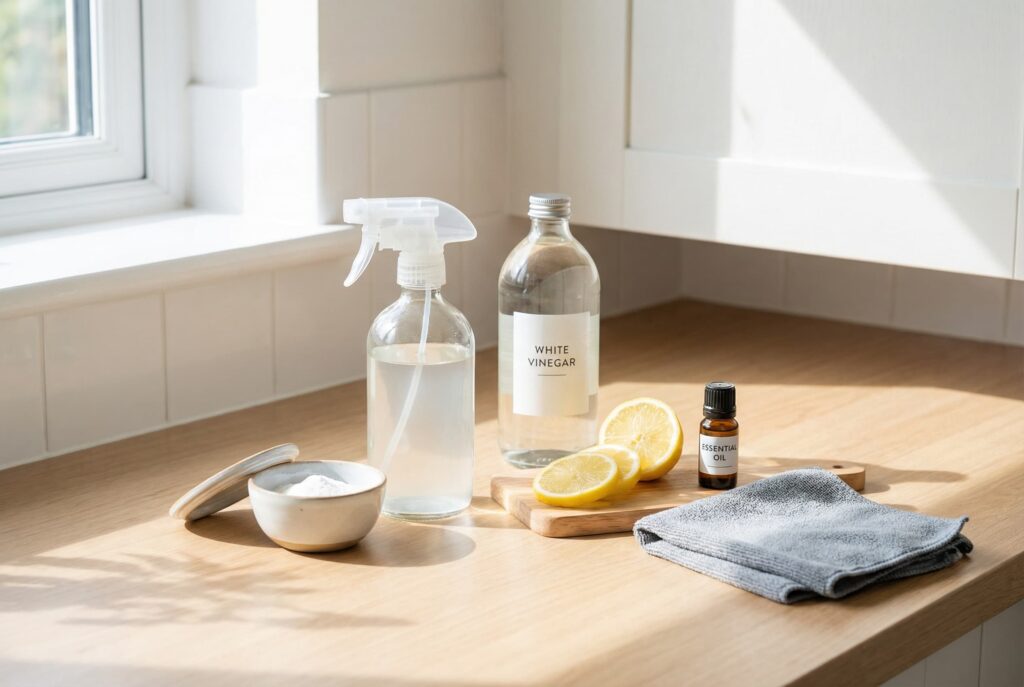
Vinegar water cleaner
A vinegar water cleaner is one of the simplest and most reliable solutions for general surfaces.
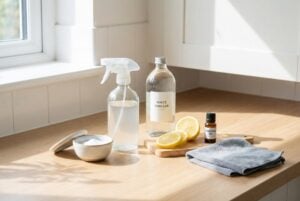
Basic vinegar cleaning spray homemade recipe
- 1 cup of water
- 1 cup white vinegar
- Optional: a few drops of essential oil
Pour the mixture into a clean spray bottle, shake gently, and label it.
The acetic acid in white vinegar helps dissolve light grease, mineral residue and soap scum. It works particularly well in kitchens and bathrooms.
However, do not use this cleaning spray on:
- Natural stone (marble, granite)
- Unsealed wood
- Waxed surfaces
A vinegar cleaning formula is a great starting point if you are transitioning towards natural cleaning products , but always test a small hidden area first.
Natural cleaning products
There is growing interest in natural cleaning products, but natural does not automatically mean effective for all surfaces.
A balanced homemade cleaning spray should:
- Break down grease
- Evaporate without streaks
- Leave minimal residue
- Avoid damaging finishes
Many households using natural cleaning products also explore other DIY options such as a floor cleaner solution homemade for hard floors or a homemade window cleaner for glass. The principle is always the same: correct dilution equals better results.
All purpose cleaner
A good all purpose cleaner needs versatility.
Simple all-purpose homemade cleaning spray
- 2 cups cup of water
- 1 tablespoon liquid castile soap
- 10 drops tea tree
- 5 drops lavender
This mixture creates a balanced purpose cleaner suitable for most sealed surfaces.
Castile soap helps cut grease, while tea tree contributes mild antibacterial properties. Lavender adds a subtle pleasant scent.
Use with a damp cloth, wipe thoroughly, and dry if needed.
This is often considered the best homemade cleaning spray for everyday kitchen counters and general household use.
Homemade cleaning solution
A strong homemade cleaning solution must match the cleaning need.
For heavier grease (for example, around hobs), you may need a homemade degreaser:
- 2 cups hot water
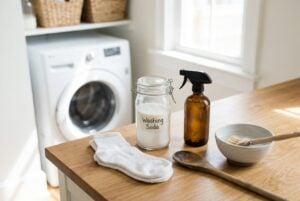
- 1 tablespoon washing soda
- ½ cup white vinegar
Shake gently before use.
This type of cleaning solution has stronger grease-cutting ability than a basic vinegar spray, but avoid frequent use on delicate surfaces.
If you prefer structured simple recipes, always write down your ratios and avoid guessing measurements.
Home cleaning products
When creating home cleaning products, think in categories:
- Degreasing
- Descaling
- Disinfecting
- Glass cleaning
One single spray cannot perform all functions equally well.
For example, in bathrooms you may prefer adapting ideas from homemade cleaning products for bathroom routines, while in kitchens a soap-based spray works better.
A thoughtful approach ensures your home clean routine stays efficient without overcomplicating things.
Vinegar cleaning spray homemade
A classic vinegar cleaning spray formula is ideal for:
- Limescale on taps
- Removing soap scum
- Cleaning shower glass
- Wiping bins
However, do not mix vinegar with bleach. That combination produces harmful fumes.
Also avoid mixing vinegar with large amounts of baking soda in storage. The reaction releases gas and reduces cleaning strength.
Use vinegar-based sprays within a few weeks and store away from direct sunlight to preserve effectiveness.
Essential oil cleaning products
Essential oil cleaning products are popular for fragrance and light antimicrobial support.
Common options:
- Tea tree
- Lavender
- Lemon
- Eucalyptus
Essential oils can improve scent and contribute mild antibacterial properties, but they are not a replacement for certified disinfectants when hygiene is critical.
Add only a few drops to your homemade cleaning spray. Too much oil leaves streaks and residue.
Homemade degreaser
For kitchen grease, a stronger homemade degreaser works better than vinegar alone.
Degreasing spray recipe
- 2 cups hot cup of water
- 1 tablespoon castile soap
- 1 tablespoon washing soda
This mixture breaks down oily residue effectively.
Spray, leave for a few minutes, then wipe with a damp cloth.
Avoid prolonged contact with aluminium surfaces.
Disinfectant spray for fabric
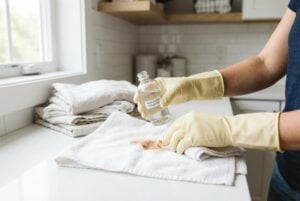
A disinfectant spray for fabric must be gentle.
Simple fabric refresh spray:
- 1 cup water
- 1 tablespoon vodka or rubbing alcohol
- 5 drops lavender
Mist lightly. Do not soak.
While this spray can reduce odours, it is not a hospital-grade disinfectant. Use caution when treating delicate fabrics.
Homemade cleaner for floors
A homemade cleaner for floors requires different dilution than a countertop spray.
Typically:
- 4 litres warm water
- 1 tablespoon mild soap
If you already use a floor cleaner solution homemade, avoid adding extra soap to your spray formula — residue builds quickly.
Consistency in your cleaning solution keeps surfaces streak-free.
Simple cleaner
Sometimes the most effective simple cleaner contains just two ingredients: water and mild soap.
Not every cleaning task requires vinegar, oils or complex blends.
For light dust and fingerprints, warm water and a damp cloth are often enough.
Natural cleaning spray
A natural cleaning spray should balance safety and performance.
Here is a comparison table for common recipes:
| Type | Main Ingredient | Best For | Notes |
|---|---|---|---|
| Vinegar spray | White vinegar | Limescale, glass | Avoid stone |
| Soap spray | Castile soap | Grease | Rinse if needed |
| Alcohol spray | Rubbing alcohol | Quick drying surfaces | Flammable |
| Baking soda paste | Baking soda | Stains, grout | Not sprayable |
Choosing the right cleaning spray improves both efficiency and long-term surface care.
DIY cleaning agents
When using DIY cleaning agents , remember:
- Measure carefully.
- Label clearly.
- Keep out of reach of children.
- Store in a cool place.
If stored properly in a sealed spray bottle, most water-based formulas last 2–4 weeks.
Homemade cleaning products for bathroom
A bathroom-specific homemade cleaning spray may focus more on descaling.
In this case, vinegar-based formulas perform better.
However, if you are already using a homemade grout cleaner for tile joints, ensure your spray complements rather than duplicates your cleaning routine.
Homemade cleaning spray lemon
A homemade cleaning spray with lemon adds freshness.
Replace half the vinegar with lemon juice for a lighter scent.
Keep in mind that lemon juice is acidic but weaker than vinegar, so heavy limescale may require stronger solutions.
Homemade cleaning spray UK
In the homemade cleaning spray UK market, water hardness varies significantly by region.
If you live in a hard water area, vinegar-based solutions may be more necessary for descaling.
Always adjust your formula based on local water conditions.
Best homemade cleaning spray
The best homemade cleaning spray depends on the task:
- For grease: soap-based.
- For limescale: vinegar-based.
- For quick-dry glass: diluted alcohol.
- For odour control: baking soda paste (not spray).
There is no universal winner — only the right formula for the job.
Easy homemade cleaning spray
An easy homemade cleaning spray requires only:
- 2 cups water
- 1 tablespoon mild soap
This minimalist mixture covers most light cleaning tasks around the house.
FAQ
How do you make homemade cleaning spray?
Mix water with either vinegar or mild soap depending on your cleaning goal. Store in a labelled spray bottle and shake gently before use.
What is the best homemade cleaning solution?
The best solution depends on the task. Vinegar works for limescale, soap works for grease, and alcohol supports quick drying.
How do you clean with bicarbonate of soda and vinegar in the UK?
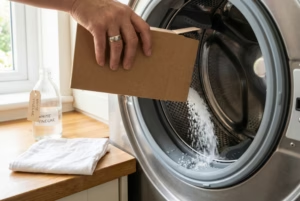
Apply baking soda first, then spray vinegar on top. Allow the reaction to loosen debris, scrub, and rinse. Do not store the mixture combined.
What should you not mix vinegar with for cleaning?
Do not mix vinegar with bleach or hydrogen peroxide. Avoid mixing large quantities with baking soda for storage.
How do you make homemade cleaning spray with vinegar?
Combine equal parts white vinegar and water in a spray bottle. Add a few drops of essential oil for scent if desired.
A well-formulated homemade cleaning spray simplifies your routine, reduces reliance on strong commercial formulas, and keeps surfaces fresh with minimal effort. Choose the correct ingredients, respect dilution ratios, and apply the right spray to the right surface. That is how you achieve consistent, professional-level results at home.