Summarise this article with:
 ChatGPT
 Mistral
 Claude
 Perplexity
 Grok
Grok
Oil stains are among the most stubborn stains you can face on clothing. Unlike water-based marks, oil penetrates deep into the fabric, binding to fibres and leaving dark patches that do not simply wash away. Whether it is cooking oil, makeup, or grease, acting quickly is the key to removing oil stains from clothes effectively.
The challenge is simple: oil repels water. That is why throwing your dress straight into the washing machine without pre-treatment often makes things worse. With the right products, a controlled method, and a bit of patience, even grease stains on clothes can be lifted safely.
How to get oil stains out of clothes
Removing an oil stain out of clothes requires a targeted approach. The goal is to absorb the excess oil first, then break it down before washing.
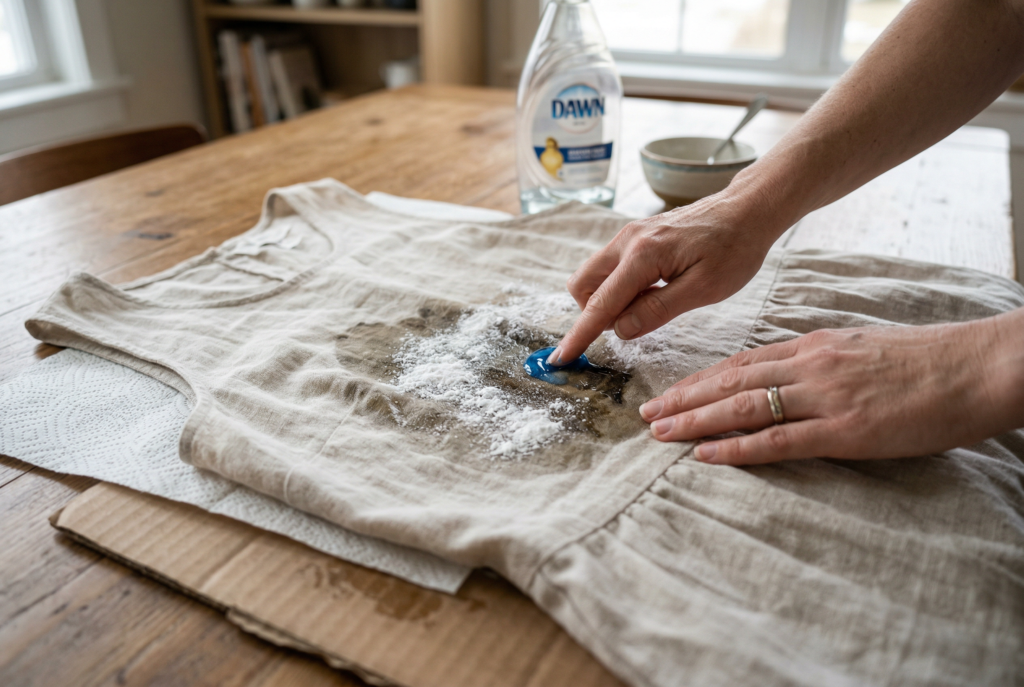
Start by placing a piece of cardboard behind the stained area. This prevents the oil from transferring to other parts of the dress. Then blot gently with paper towels to lift as much oil as possible.
This first step is essential. Skipping it allows the oil to spread further into the fabric, making the stain harder to remove.
Grease stain on clothes
A grease stain on clothes behaves similarly to oil but is often thicker and more stubborn. Kitchen splashes or cosmetic products can leave greasy residues that cling to fibres.
After blotting, apply a small amount of dish soap directly onto the stain. Dish soap is designed to cut through grease, making it one of the most effective tools for cleaning grease stains.
Work the product gently into the stain using your fingers or a soft cloth. Avoid scrubbing too hard, as this can damage delicate fabrics.
Grease cleaner for clothes
Choosing the right grease cleaner for clothes makes all the difference. Not all cleaning products are suitable for every fabric, especially delicate dresses.
Here is a quick comparison:
| Product | Best for | Notes |
|---|---|---|
| Dish soap | Fresh oil stains | Breaks down grease effectively |
| Baking soda | Absorbing oil | Ideal before washing |
| Liquid detergent | General stain removal | Use after pre-treatment |
| Specialist product | Delicate fabrics | Safe for sensitive materials |
Using the right product ensures that the stain is treated without damaging the fabric or affecting the colour.
Cleaning grease stains
When cleaning grease stains, layering your approach works best. Start with absorption, then move to cleaning.
- Apply baking soda to absorb oil
- Let it sit for 15–30 minutes
- Brush off gently
- Apply dish soap and work it in
- Rinse with warm (not hot) water
This method is similar to techniques used when tackling food stains where you might clean curry stain or clean a tomato sauce stain , but oil requires more emphasis on absorption.
Best way to get oil out of clothes
The best way to get oil out of clothes combines quick action and the right sequence.
First, absorb. Then treat. Finally, wash.
Never skip straight to washing. Without pre-treatment, oil binds deeper into the fabric, making the job harder.
If needed, repeat the process. Oil stains often require more than one attempt.
Grease stains on clothes after washing
Finding grease stains on clothes after washing is common. Heat from washing or drying can set the stain permanently if it has not been treated properly.
If this happens:
- Do not use the tumble dryer
- Reapply dish soap or liquid detergent
- Repeat the cleaning process
This extra step can still break down the oil, even after an initial wash.
Remove olive oil from clothes
To remove olive oil from clothes, act quickly. Olive oil spreads fast and can leave large stains.
Blot immediately, apply baking soda, and follow with dish soap. This combination helps absorb and break down the oil effectively.
How do you remove oil stains from a dress?
Start by blotting with paper towels to remove excess oil. Place a piece of cardboard underneath the stain to protect the rest of the garment.
Apply dish soap directly onto the stain, gently work it in, and rinse with warm water. Repeat if necessary before washing.
This step-by-step process ensures the oil is lifted without damaging the dress.
Can lemon remove oil stains from clothes?
Yes, lemon juice can help break down oil due to its natural acidity. However, it should be used carefully.
Apply a small amount to a small area first to avoid affecting the colour. Lemon works best as a supporting method rather than the main treatment.
How do you remove oil stains from clothes that have already been washed?
For stains that have already been through the washing machine, repeat the treatment process.
Apply dish soap, let it sit, and rinse again. Avoid heat until the stain is fully gone.
Patience is key. Even set-in stains can be improved with repeated treatment.
How do you remove oil stains from clothes?
The general method remains consistent across most fabrics:
- Absorb the oil first
- Apply a grease-cutting product
- Rinse and repeat
- Wash only once the stain is reduced
This approach works for most oil stains from clothes, regardless of the source.
How do you remove grease stains from clothes?
Grease requires slightly more effort due to its thickness.
Use baking soda first, followed by dish soap. This two-step method helps lift even stubborn residues from the fabric.
How do you remove oil stains from pants?
Treat pants the same way as dresses, but pay attention to seams and thicker areas where oil can settle.
Work the product into the fabric thoroughly before rinsing.
How do you remove oil stains from fabric?
The type of fabric matters. Delicate fabrics require gentler handling, while more durable materials can tolerate repeated treatment.
Always test products on a small area before applying them fully.
How do you remove olive oil stains from clothes?
Olive oil stains follow the same removal process: absorb, treat, and wash.
Avoid rubbing, as it spreads the oil further into the fibres.
How do you remove cooking oil stains from clothes?
Cooking oil stains behave similarly to other oils but may contain food residue.
Treat quickly and follow the same process. This is similar to handling spills where you might needto clean red wine stain or a chocolate stain , but with more focus on grease removal.
How do you remove grease stains from pants?
Use baking soda and dish soap, working into thicker fabric areas carefully.
Repeat the process if needed to fully lift the stain.
How do you remove old or dried oil stains from clothes?
Old stains require repeated treatment. Apply dish soap, let it sit longer, and rinse.
Do not use heat until the stain is completely gone.
How do you remove oil stains from jeans?
Jeans can handle more robust treatment. Use warm water and repeat the cleaning steps if necessary.
Practical tips for removing oil stains
Consistency and care are essential when dealing with oil.
- Always blot with paper towels first
- Avoid heat until the stain is gone
- Use the right product for the fabric
- Repeat the process if needed
Oil stains behave differently from other stains. While methods used to clean ink stain or to get stains out of suede can offer inspiration, oil removal always relies on absorption first.
FAQ
How quickly should you treat an oil stain?
Immediately. The faster you act, the easier it is to remove the oil before it binds to the fibres.
Can oil stains be removed completely?
Yes, in most cases. However, stubborn stains may require repeated treatment.
Is hot water good for oil stains?
No. Hot water can set the stain. Use warm or lukewarm water instead.
Can you put a stained dress in the dryer?
No. Avoid the tumble dryer until the stain is fully removed.
Oil stains may be tough, but they are not unbeatable. With the right products, a careful method, and a bit of persistence, your dress can look as good as new — no stress, just clean results.